EN
EN  CZ
CZ  SK
SK  PL
PL  BG
BG  DE
DE  UK
UK  FR
FR  HU
HU  IT
IT  RO
RO  SL
SL  ES
ES  AT
AT  EU
EU 

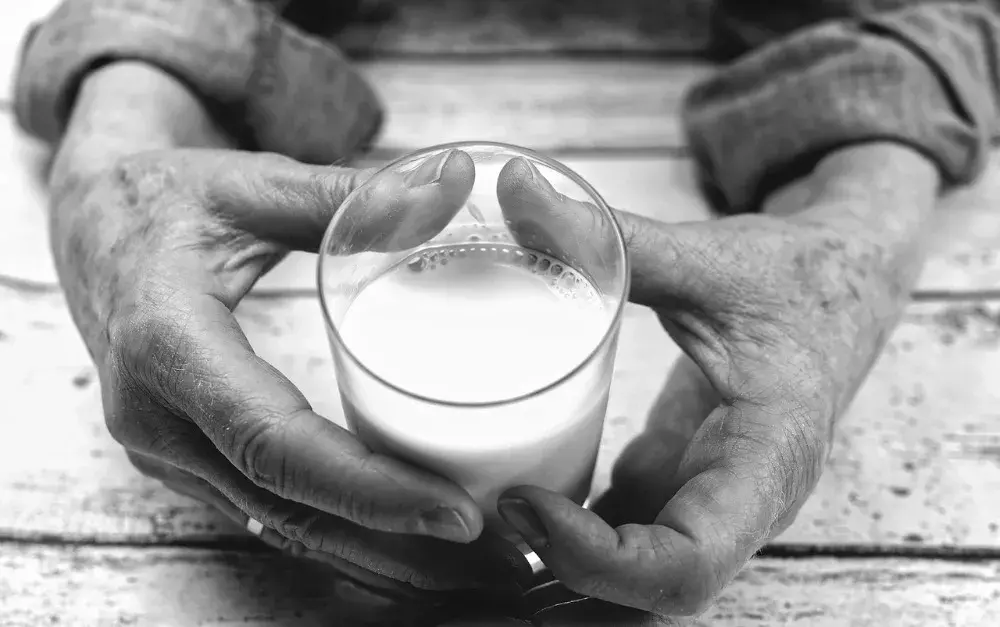
Dairy products evoke strong emotions and conflicting claims. Let's look at them from several angles - from the perspective of data, traditions, and individual body reactions.
Dairy products are among the foods that are often debated for their health effects. For some, they are a symbol of healthy bones and a "basic food", for others, they are an unnecessary burden or even a cause of inflammation and civilization diseases. Between these two poles, a wide spectrum of personal experiences, opinions and recommendations moves.
It is therefore not surprising that the topic of milk is often simplified to the question: Is milk healthy or harmful?
But the question posed in this way is often misleading.
Nutrition is not black and white, and few foods work the same for everyone. Dairy products also blend several layers at once, from traditions and long-standing nutritional recommendations, to personal digestive experiences, to modern research.
The result is an environment in which shortcuts and myths are easily spread, albeit with good intentions, but without a broader context.
The aim of this article is not to defend dairy products or call for their elimination.
It's not about who is "right", but about understanding the context.
Let's take a look at it:
Data can show us general trends and connections. How a particular food manifests itself in an individual, but it always remains the result of a combination of many factors – digestion, lifestyle, stress and overall diet.
That is why it makes sense to look at dairy products objectively, without ideology and with respect for individuality.
When people talk about „dairy products,“ it often seems like they are talking about a single food with a uniform effect on the body. In reality, this term hides a very diverse group of products, which differ in composition, degree of processing and how the body reacts to them.

When most people think of "milk," they think of liquid milk in a carton. But even here, there are fundamental differences.
Yogurt, kefir, or sour milk are produced by fermentation. During this process, microorganisms partially break down lactose, change the structure of proteins, and create other biologically active substances.
Cheeses are a very diverse group. Most mature cheeses contain minimal lactose but are higher in protein and fat. Their health effects depend greatly on the amount and overall context of the diet.
Milk, kefir, and hard cheese are not the same from our body's perspective. Yet they are often lumped together in debates, which can lead to inaccurate conclusions and unnecessary disputes.
When talking about the health effects of dairy products, it always depends on:
Without this distinction, even well-intentioned statements easily miss the mark on reality.
Lactose – milk sugar, which can cause digestive problems with reduced lactase activity; its amount decreases with fermentation and ripening.
Proteins (casein and whey) – complete proteins, which may cause allergic reactions.
Fat – affects the taste and energy value of the product. Its effect on the body cannot be separated from the context of the overall diet.
Similar claims are repeated in debates about the health effects of dairy products. The more they are repeated, the more they can seem like facts. But a closer look at the available data shows that the reality is usually less clear-cut and more context-dependent.
„"Dairy products are harmful to the body"“
Neither clinical observations nor controlled studies have shown that dairy consumption leads to increased mucus production or worsening respiratory problems. The discrepancy between subjective feeling and measurable physiological mechanism has been repeatedly demonstrated.
Some people describe a feeling of a lump in their throat or the urge to cough after drinking milk. The explanation may be that the consistency of the liquid itself and its interaction with saliva creates a feeling of "coating" in the mouth and throat, without any changes in the airways.
What follows from this:
The available data does not indicate that dairy products objectively „suffocate“ the body. However, the individual experience may be real.
„"Milk causes inflammation and civilization diseases"“
Inflammation is a frequently mentioned term in modern nutrition. However, it is important to distinguish between acute inflammation, which is a natural part of the body's defense reactions, and chronic low-level inflammation, which is related to overall lifestyle (we wrote about inflammation in our article: How to reduce inflammation in the body and promote longevity).
Current research does not show that dairy products themselves are a widespread trigger of inflammatory processes. Studies tracking inflammatory markers in the general population mostly show a neutral effect, or only slight differences depending on the type of product, health status and overall diet composition.
What follows from this:
The available data do not support the idea that dairy products cause inflammation or lifestyle diseases across the board. A more significant role is played by overall lifestyle, diet quality, stress and exercise.
„"Milk is needed for healthy bones" - myth or fact?
Milk is traditionally associated with bone health, primarily due to its calcium content. However, this connection is often simplified to imply that higher milk consumption automatically means a lower risk of osteoporosis.
Looking at the data, it appears that the relationship between dairy, calcium, and bone health is more complex. Higher milk intake alone is not consistently associated with a lower risk of fractures. Bone health is influenced by a number of factors, and calcium is just one of them.
What follows from this:
Milk is not a biological requirement for bone health. Milk consumption alone does not guarantee bone strength; the broader context of lifestyle and nutrition is crucial.
Alongside modern nutritional science, there are also traditional systems that look at diet in a different way. Traditional Chinese Medicine (TCM) and Ayurveda they observe how foods affect balance of the organism, digestion and energy of the person as a whole.
These approaches help explain why reactions to the same foods vary significantly between people.

Dairy products in traditional Chinese medicine
In traditional Chinese medicine, dairy products are generally considered to be burdensome for digestion, especially in people with weakened spleen function (the organ responsible for processing food and fluids). They are often attributed with the ability to create „"moisture" and "phlegm"“, cooling nature and tendency to slow digestion when consumed in excess.
TČM does not label dairy products as "bad", but emphasizes that it is necessary to take into account the amount of dairy products consumed and the digestive status of a particular person.
Interestingly, traditional Chinese medicine often usesépe evaluates fermented or heated dairy products than cold milk consumed alone. And this is also consistent with the experiences of many people in practice.
Ayurvedic perspective: milk as a specific food
Ayurveda works with the concepts of doshas (Vata, Pitta, Kapha) and with a strong emphasis on agni - digestive fire. Milk and dairy products are not evaluated uniformly here, but always in the context of the person's constitution and current condition. Here too, milk is considered nourishing and strengthening, but at the same time difficult to digest. And that is why the emphasis is placed here on form (warm vs. cold milk), i time of consumption and also combination with other foods, and digestive condition of the person in question.
While milk can promote regeneration and calmness for some people, for others it can lead to a feeling of heaviness and phlegm or fatigue, especially if digestion is weakened.
In addition to general data and studies, there is another aspect that cannot be overlooked: individual experience. Many people feel that dairy products are "not good for them.".
At the same time, it is important to distinguish why these reactions occur. It is precisely the lack of clarity in terms and their confusion that is one of the main reasons why there is confusion around dairy products.
Lactose intolerance × allergy × individual sensitivity
The statement "I don't like milk" can hide very different mechanisms.
Cow's milk protein allergy
It is an immune reaction, most often to casein or whey proteins. It typically occurs in infancy and childhood and resolves with age in most children. It is relatively rare in adults. The symptoms can be severe and require the exclusion of dairy products.
Lactose intolerance
Lactose intolerance is related to reduced activity of the enzyme lactase, which breaks down milk sugar. It is mainly manifested by digestive problems such as bloating, diarrhea or abdominal pain. It is not an allergy or an inflammatory process and its intensity varies significantly between individuals. Some people tolerate small amounts of lactose or fermented products without problems.
Individual sensitivity
There is also a group of people who do not have a diagnosed allergy or intolerance, but still feel discomfort after consuming dairy products. Here, there is no single clear cause, but rather an interplay of multiple factors. Digestive status, microbiome, stress, hormonal balance, and overall lifestyle all play a role.
The role of the gut microbiome
The gut microbiome influences, among other things, how we digest and react to food. Differences in its composition may explain why some people tolerate dairy products without difficulty, while others experience discomfort. In practice, fermented dairy products are often better tolerated than milk itself.
Quality and quantity
It also depends on how much and in what form we consume dairy products. A smaller amount of a quality product is usually more tolerable for the body than larger doses of highly processed products (we wrote about the quality of some foods and dietary supplements and their effect on our body in our article: 5 mistakes when buying food and dietary supplements). The body's reaction is often related to the quantity and form rather than the food itself.
Combination with other diets
Dairy products are often consumed alongside sugar, white flour, and ultra-processed foods. This combination can worsen digestion and contribute to feelings of heaviness or bloating. It is not always easy to distinguish whether the problems are related to the dairy products or the overall composition of the food.
Stress, hormones and digestion
Digestion is closely linked to the nervous system and hormonal balance. During periods of prolonged stress, hormonal changes or exhaustion, the body may become more sensitive to foods that it previously tolerated without difficulty. Tolerance can therefore change throughout life.

After looking at the data, traditional approaches, and individual differences, a simple question arises: What can you take away from all this in your daily life?
A sensible approach to dairy products doesn't lie in extremes. It usually makes more sense to follow the context and respond to your body's signals than to follow universal recommendations.
If you feel good after consuming dairy products in the long term, there is no reason to eliminate them just because there are strong opinions about them. If, on the other hand, difficulties arise repeatedly, it makes sense to perceive the context - what type of product, combination with other foods, stress and overall lifestyle.
Fermented dairy products are often better tolerated than milk itself, but there is no universal rule. Your body's reactions can change over time and it's worth paying attention to them.
Health is usually not achieved by eliminating one food,
but with long-term balance, care for digestion and respect for your own body.
Sources and links to studies: